
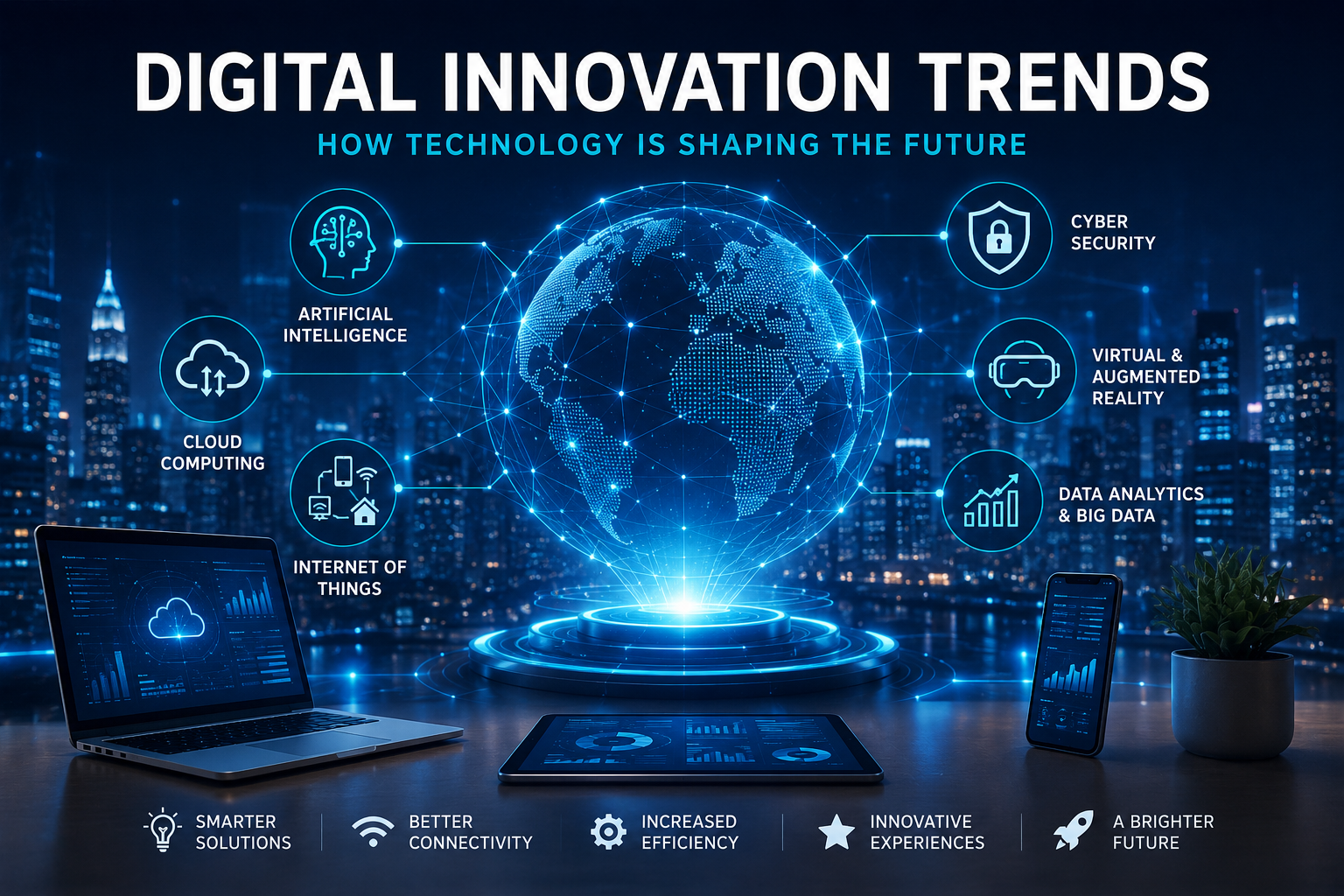
Digital Innovation Trends: How Technology is Shaping the Future
 0
0
 0
0
Digital innovation trends are transforming how we live, work, and learn. From artificial intelligence to smart devices, technology is evolving at a rapid pace and influencing almost every part of our daily lives.
Understanding these trends is important—not just for tech professionals, but for students, creators, and anyone who wants to stay relevant in a digital world.
What is Digital Innovation?
Digital innovation refers to the use of technology to improve processes, solve problems, and create new opportunities.
Examples of Digital Innovation:
- Mobile applications
- Cloud computing
- Artificial intelligence (AI)
- Automation systems
These innovations are helping businesses grow faster and making life more convenient for users.
Key Digital Innovation Trends Today
Several trends are shaping the future of technology right now.
1. Artificial Intelligence (AI)
AI is becoming smarter and more accessible. It is used in:
- Chatbots
- Recommendation systems
- Data analysis
Companies like Google and Microsoft are leading advancements in AI development.
2. Cloud Technology
Cloud computing allows users to store and access data online instead of relying on physical devices.
Benefits:
- Flexibility
- Cost efficiency
- Remote access
This trend is essential for modern businesses and remote work environments.
3. Internet of Things (IoT)
IoT connects everyday devices to the internet.
Examples include:
- Smart homes
- Wearable devices
- Connected cars
These technologies make daily life more efficient and automated.
Impact on Education and Learning
Technology is changing how people learn.
Digital innovation is closely related to modern education. If you missed it, check:
- https://banyancollege.org/modern-education-creative-learning/
- https://banyancollege.org/creative-writing-ideas-storytelling/
Key Changes in Education:
- Online learning platforms
- Virtual classrooms
- Interactive learning tools
Students now have access to global knowledge anytime, anywhere.
Why Digital Skills Are Important
In today’s world, having digital skills is no longer optional.
Essential Digital Skills:
- Basic coding knowledge
- Data analysis
- Digital communication
- Online research skills
- Cybersecurity awareness
These skills help individuals stay competitive in the job market.
Challenges of Digital Innovation
While technology offers many benefits, it also comes with challenges.
Common Challenges:
- Data privacy concerns
- Technology addiction
- Job automation risks
Balancing innovation with responsible use is key to long-term success.
Learn from Trusted Sources
If you want to explore more about digital innovation, check:
These platforms provide insights into the latest trends and developments.
The Future of Digital Innovation
The future will bring even more advanced technologies.
What to Expect:
- Smarter AI systems
- More automation
- Advanced virtual reality
- Increased connectivity
The world will become more digital, and adapting early is a huge advantage.
Conclusion
Digital innovation trends continue to shape the future in powerful ways. Whether it’s education, business, or everyday life, technology is driving change at every level.
By understanding these trends and developing the right skills, you can stay ahead and take advantage of new opportunities in the digital era.
Stay curious, keep learning, and embrace innovation—it’s the key to future success.